ServicesElectrical Repair
Electrical Repair in Westworth Village, Traced to the Cause
A breaker that won't stay on or an outlet that went dead is telling you something. We test the circuit, find out why it failed and fix it to current code. You hear what we found and what it costs before we start.
What Electrical Repair Covers
Most repair calls start with one small problem. A switch that feels warm. Lights that dim when the AC kicks on. A bathroom outlet that quit and won't reset. The symptom is easy to see. The cause usually sits somewhere else on the circuit, like a loose connection two boxes down or a worn breaker in the panel.
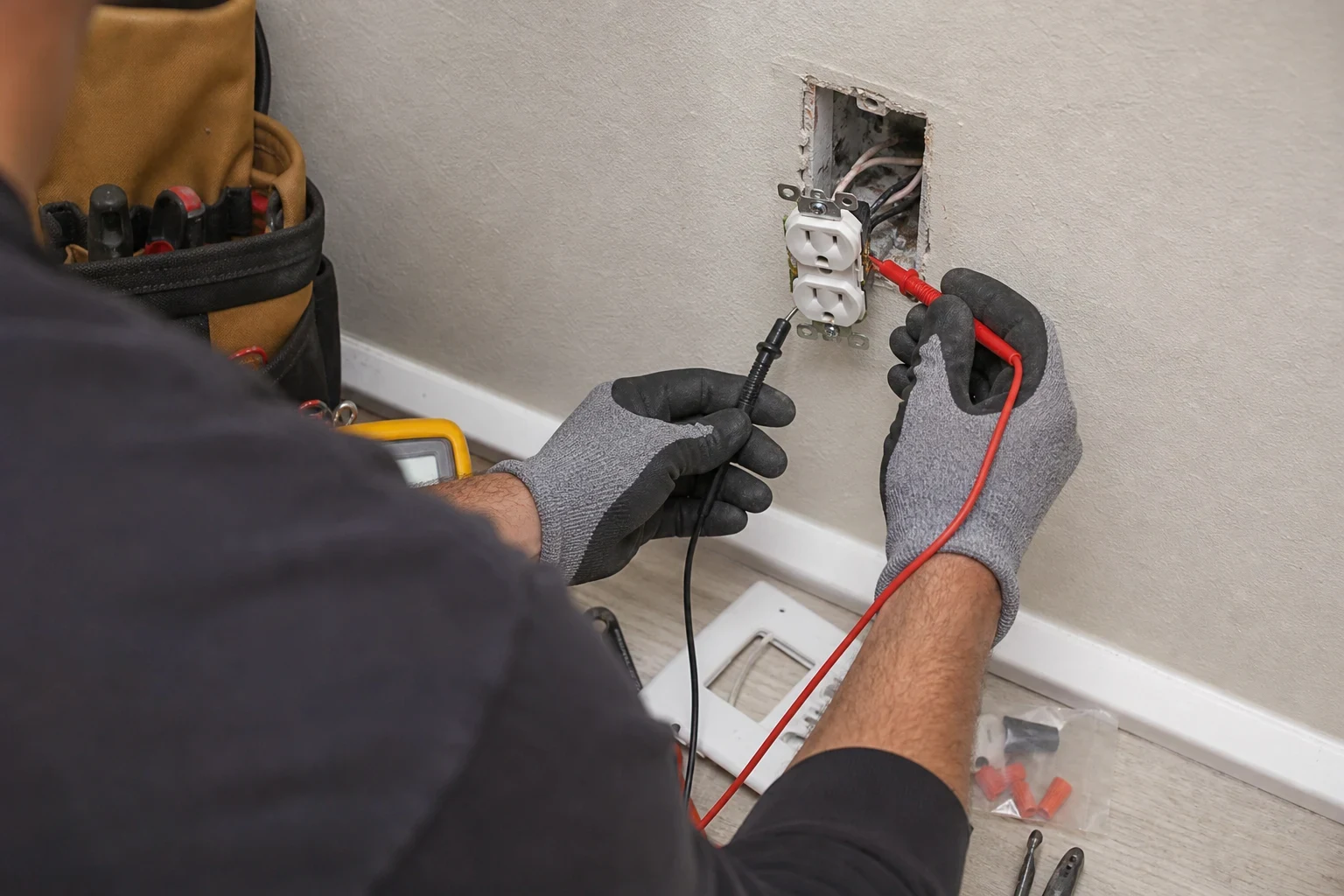
We don't swap parts until something works. We test first, with a meter and a look at every connection on the circuit. Then we fix the actual fault and bring that part of the system up to the code it needs to meet. If a repair needs a permit and inspection, we tell you up front and handle it as the local jurisdiction requires.
What We Fix
Breakers that trip
We check the load on the circuit, the breaker itself and the wiring for shorts or ground faults. Then we fix whichever one is the problem.
Dead or loose outlets
Worn receptacles, burned backstabbed connections and outlets that wiggle in the wall. We replace them with properly rated devices and tight screw terminals.
GFCI and AFCI protection
Kitchens, baths, garages and outdoor outlets need ground-fault protection under code. We test and replace failed GFCI devices and track down nuisance tripping on arc-fault breakers.
Flickering and dimming lights
We look at fixtures, switches, neutrals and the service connection. Lights that dim across the whole house point to a different fault than one flickering fixture.
Switches and fixture wiring
Failed switches, warm dimmers and fixtures wired without a proper box or ground get repaired the right way.
Outdoor circuits
Exterior outlets, covers and landscape circuits take heat, sun and rain. We replace weathered parts with in-use covers and the right outdoor-rated gear.
Signs Something Needs Repair
A breaker keeps tripping
Once in a while is the breaker doing its job. Again and again on the same circuit means an overload, a short or a failing breaker.
Warm or discolored outlets
Brown marks, a melted look or a cover plate that feels warm means a connection is heating up. Stop using it until it's checked.
A burning or plastic smell
If you smell hot plastic near an outlet, switch or the panel, turn that circuit off at the breaker and book a visit.
Buzzing or crackling
Electricity should be quiet. Sound from a switch, outlet or panel usually means arcing at a loose connection.
Lights dim when big loads start
A brief dip when the AC compressor starts in July can be normal. A deep dim, or one that lingers, needs a look.
An outlet that won't come back
If resetting the GFCI and checking the breaker doesn't help, there's a break somewhere on the circuit we need to find.
How a Repair Visit Goes
- 1
You call and describe it
Tell us what you're seeing and when it happens. We book a service visit and ask you to leave the affected circuit off if anything smells hot or looks scorched.
- 2
We test before we open anything up
We start at the panel, then check the circuit with a meter and look at each connection point. Most faults show up within the first round of testing.
- 3
You get the findings and the price
We show you what failed, explain why and tell you what the fix costs. If the work needs a permit, you'll know that here, not after.
- 4
We make the repair
Connections are tightened to spec, damaged wire is cut back or replaced and devices are matched to the circuit. Nothing gets left half done behind a cover plate.
- 5
We test again and clean up
We retest the circuit under load, check the protection devices and pick up after ourselves. You get a plain rundown of what changed.
What Sets the Cost of a Repair
Repair prices depend on what's actually wrong, and that isn't known until we test. That's why we find the cause first and give you the price before any repair work starts. These are the things that move the number.
- What the fault turns out to be
- A worn outlet is a short job. A loose neutral that's been arcing inside a wall takes more time and more material.
- How easy it is to reach
- Open boxes and a clear panel go quickly. Wiring in a hot attic, behind finished drywall or under built-in cabinets takes longer to reach and patch around.
- Parts and materials
- GFCI and AFCI breakers cost more than standard ones. Outdoor-rated devices and weatherproof covers add to the material side.
- Permits and inspection
- Simple like-for-like swaps often don't need one. Larger repairs can, and the permit and inspection become part of the job.
- How many problems we find
- Sometimes one complaint turns up two or three faults on the same circuit. We list each one so you can decide what to fix now.
Common Electrical Repair Questions
Something not covered here? (682) 327-0639
Why does my breaker keep shutting off?
Usually the cause is one of three: too much load on the circuit, a short or ground fault in the wiring or a device, or a breaker that has simply worn out. Overloads often come from window units, space heaters and kitchen appliances on the same circuit. We run tests to pin down which it is instead of guessing.
Does my repair need a permit?
That comes down to the work. Replacing a dead switch or outlet with a matching one generally doesn't. Adding circuits, running new wire and working in the panel often does. We tell you where your job falls and handle the permit and inspection as the local jurisdiction requires.
Can you fix just the one outlet that stopped working?
Yes. If that outlet is the only problem, that's all we repair. If our tests show the trouble starts somewhere else on the circuit, we show you where and explain why a new outlet alone wouldn't hold up.
What if you uncover something bigger, like a panel problem?
We point it out and go over your choices. If it means a panel upgrade or rewiring part of the home, you get the details and make the call. There's no pressure to sign up for bigger work on the spot.
Is it safe to use the circuit until you get here?
Not if there's buzzing, heat, scorch marks or a burning smell. Turn that breaker off and leave it off. If an outlet simply stopped working with no other warning signs, it's usually fine to leave it be until we arrive.
Find the Fault and Fix It Right
Let us know what you're seeing and we'll book a time to test it. Before any repair begins, you'll hear what caused it and what it costs.