ServicesTorque & Cleans
Torque & Clean Service in Westworth Village
Loose connections in a panel make heat, and heat wears out breakers, lugs and wire. We clean out your panel and tighten each connection to the manufacturer's torque value with a calibrated tool. You get a written note of what we found and what, if anything, needs fixing.
What a Torque and Clean Is
Every breaker and lug in your panel holds a wire with a screw. Over the years those screws back off a little. Copper and aluminum swell when they carry load and shrink when they cool, and that daily cycle slowly loosens the grip. A loose connection runs hot. Hot connections discolor, pit and can arc.
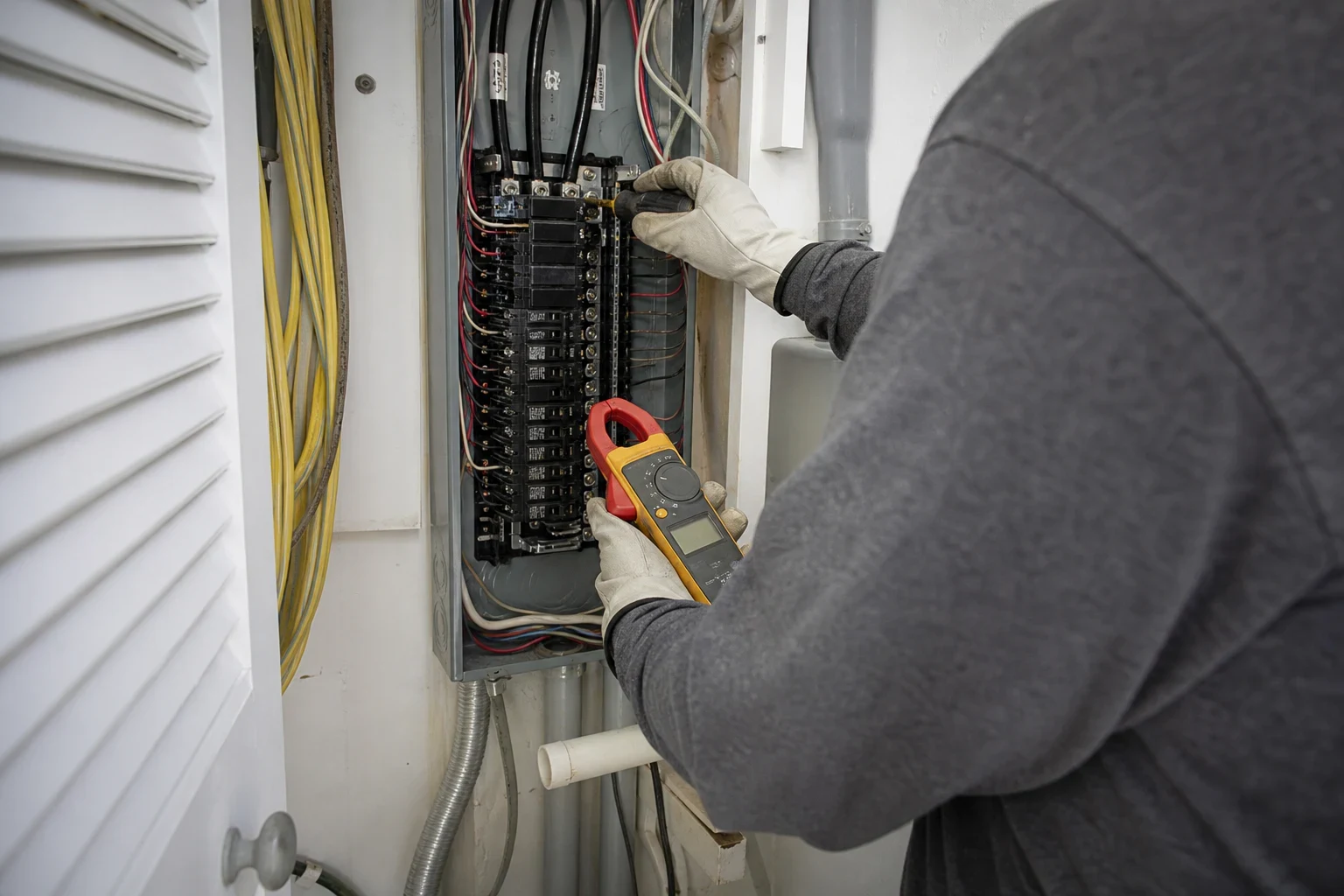
A torque and clean is simple maintenance for that problem. We turn the power off, open the panel, remove dust and debris, check every termination, and set each screw to the torque value printed on the label or in the maker's instructions. The electrical code calls for a torque tool whenever the manufacturer lists a value, so we don't tighten by feel.
It's a good fit for older panels, panels in hot garages or on outside walls, and any panel that has picked up new loads like an EV charger or a big appliance. If your panel has bigger issues, we'll say so and point you to panel upgrades or electrical repair.
What We Do on a Torque and Clean
Shutting down safely
You hear from us before the power goes off, and we plan around fridges, medical equipment or a home office. We switch off the main and test that the bus is dead before any work starts.
Clearing out dust and debris
Using non-conductive tools, we vacuum and brush the inside of the enclosure. Dirt, dust and insect nests trap heat and moisture and can give current a path it shouldn't have.
Tightened to the maker's spec
Main lugs, neutral and ground bars and breaker terminals are set with a calibrated torque screwdriver or wrench, using the numbers on the panel label or from the breaker maker. No guessing.
Every connection inspected
We look for corrosion, scorching, melted insulation, double-tapped breakers and aluminum wire on the wrong connectors. We photograph anything that isn't right.
A written report
We leave a brief summary of what we cleaned, tightened and noticed. If a repair is needed, it explains what and why, and the next step is your choice.
Signs Your Panel Is Due for a Torque and Clean
The panel cover feels warm
The door and inner cover should be about room temperature. If your hand can feel heat, a connection inside is likely running hot.
Crackling or a buzz
A soft hum by the panel may be nothing. Sizzling, crackling or a buzz that rises and falls with use is a problem.
Lights dip or flicker
If lights drop when the dryer or AC starts, a loose lug or neutral is often to blame. Get it checked before it worsens.
Trips with no obvious cause
A loose terminal can heat a breaker enough to trip it while the circuit is nowhere near overloaded.
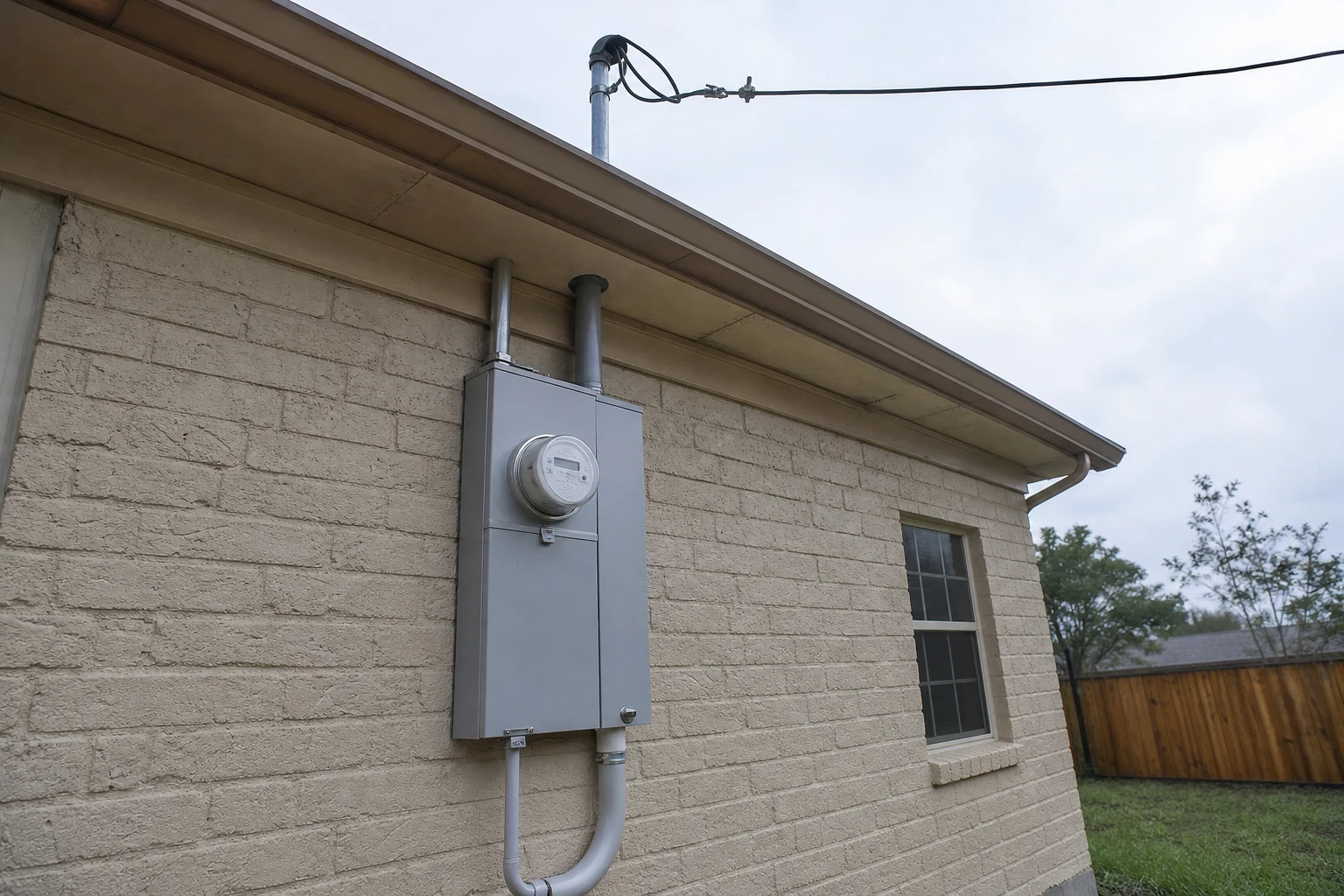
The panel is outside or in the garage
Summer heat makes these panels expand and shrink more. Outdoor ones also gather dust and bugs sooner.
No one has looked inside in years
If the last time an electrician opened it is a blur, or you've added heavy loads since then, it's sensible to have it checked.
How the Visit Goes
- 1
A quick phone call
Tell us where the panel is, what it's like and anything odd you've noticed. We book a time and say how long you'll be without power.
- 2
A check with power still on
Before removing the cover, we look the panel over and note anything to be careful with. The label tells us the torque values and breaker types.
- 3
Power off, then clean and torque
We switch off the main and verify it's dead. The service wires into the main stay energized unless the utility cuts them, so we work carefully around them while we clean and torque every connection.
- 4
Power restored and tested
The cover goes back on, power comes back in stages and we make sure each circuit works as before. Some clocks and electronics may need to be reset.
- 5
Your report
We go over what we found and leave the written notes and photos. On most visits, nothing else needs doing.
What Moves the Price
We price a torque and clean by phone once we know a few basics about your panel. The work itself is steady and predictable. What changes the price is how much panel there is and what shape it's in.
- Number of panels
- A home with a main panel plus a subpanel in the garage or an addition takes more time than a single panel.
- Circuit count
- More breakers mean more terminals to check and torque.
- Access and location
- A panel behind shelving, in a tight closet or on an outside wall in full sun takes longer to work on safely.
- Condition inside
- Heavy dust, nests, corrosion or damaged parts add cleanup time. Any repairs are quoted separately and only done if you say yes.
- Utility coordination
- If the main lugs need work that requires the utility to cut power at the meter, that adds scheduling and time.
Torque and Clean Questions
Something not covered here? (682) 327-0639
How long will my power be off?
For a typical single panel, the power is off for part of the visit, not all of it. We tell you the expected time when you book. A subpanel or a lot of debris can stretch it.
Does a torque and clean need a permit?
Routine cleaning and tightening is maintenance and usually doesn't need one. If we find something that needs repair, like a damaged breaker or a bad lug, we pull a permit when the local jurisdiction requires it and explain the inspection step.
How often should I have it done?
There's no single rule for homes. Many people do it every few years, or after adding a big load like an EV charger. A hot garage or outdoor panel is a reason to check sooner.
Can't you just tighten everything as hard as you can?
No. Too tight can crack breaker housings, crush wire strands or strip threads, and that causes its own heat problems. That's why we use the maker's torque value and a calibrated tool.
What happens if you find a real problem?
We stop, show you the photo and explain it in plain words. Small fixes may be quick. Bigger issues get a separate price, and nothing extra is done until you agree.
Is this the same as a home electrical inspection?
No. A torque and clean focuses on your panel and its connections. If you're dealing with a failed inspection or a list of items to fix, our code corrections and inspection fixes service is the better fit.
Get Your Panel Cleaned and Tightened
Tell us where your panel is and how many you have. We'll set a time, tell you how long the power will be off and show you what we find.