ServicesHome Battery Backup
Home Battery Backup Systems in Westworth Village
A home battery keeps your fridge, lights and Wi-Fi running when the power drops, with no fuel and no noise. We plan which circuits it carries, wire it to code, pull the permit and stay through inspection so the system is signed off.
How a Home Battery Works and Who It Suits
A home battery holds stored power and sends it into your home once the grid fails. A switching device, usually called a gateway or transfer switch, separates your home from the utility lines so the battery can take the load within a second or two. Most people notice nothing more than a quick flicker.
It makes sense if Texas storms or summer strain on the grid have left you with spoiled food, a hot house or a medical device that stopped. It runs silently, it can sit inside or outside, and it never needs fuel. If you need heavy power for days with no grid and no sun, a standby unit may be the better fit, and our Generator Installation page explains that option.
When these systems have problems, the battery is rarely the cause. The usual culprits are a hurried load plan, a poor spot to mount it or wiring that cuts code corners. We go over each of these with you before work begins.
What the Installation Includes
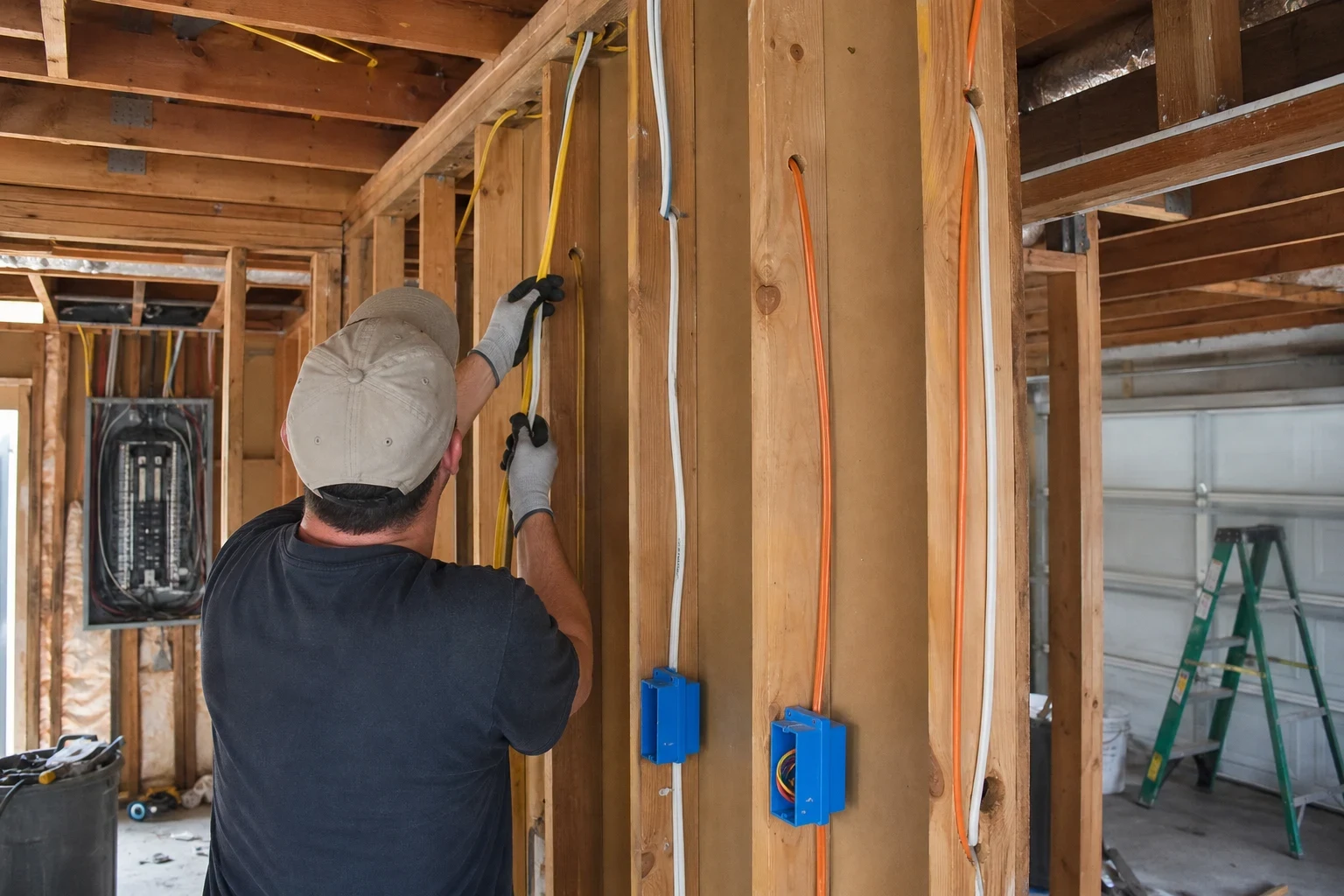
- Load plan and circuit list
- We walk your home and sit down with you to pick the circuits that matter most. A battery can carry a lot, but not everything at once. A central AC compressor or electric range can drain it fast, so we tell you plainly what it can and cannot run.
- Panel check
- We look at your main panel's capacity, condition and open space. Some homes need a separate backup loads panel. If the main panel is worn out or too small, we say so and explain a panel upgrade before we add to it.
- Mounting in the right spot
- Batteries need set clearances, protection from vehicle impact in a garage and a location that stays within the maker's temperature range. Texas heat shortens battery life, so we avoid west-facing walls in full sun when we can.
- Gateway and wiring
- We install the switching equipment, run conductors sized for the load and label every breaker so you know what stays on in an outage.
- Inspection and utility paperwork
- We pull the permit as required by the local jurisdiction, meet the inspector and handle any utility notice that applies.
- Walkthrough and test
- We cut grid power on purpose, watch the battery take over and show you the app or display before we leave.
Signs Battery Backup Is Worth a Look
Outages keep costing you food
If you have thrown out a full fridge more than once, a battery on the kitchen circuit pays its way in fewer losses.
Someone at home relies on power
Oxygen concentrators, CPAP machines and refrigerated medicine cannot wait for the lights to come back. A battery covers that gap without anyone hauling a generator outside.
You work from home
Keeping the router, a laptop and a few lights on means a storm does not end your workday.
You don't want fuel or engine noise
No gas cans, no oil changes, no running motor near your windows at night.
Your sump or well pump can't stop
Pumps pull a big starting surge. We check that the battery and inverter can handle it before we promise it will run.
How the Install Runs
- 1
Site check on the first visit
We check your panel, measure the spot where the battery will mount and go over the circuits you want covered. Then you get a written scope listing the equipment, the wiring and each inspection step.
- 2
Permit filed first
The permit goes to the local office before any work begins. Some jurisdictions ask for a one-line diagram plus spec sheets for the equipment, and we put those together for you.
- 3
The install
Your power is shut off for part of the day while we hook up the gateway and move circuits. We give you the shutoff window in advance so you can plan for it. Most jobs are finished in one or two days.
- 4
Inspection and turnover
We meet the inspector, correct anything noted and run a real outage test while you watch. You end up with a labeled panel and a simple rundown of how the system acts in an outage.
What Moves the Price
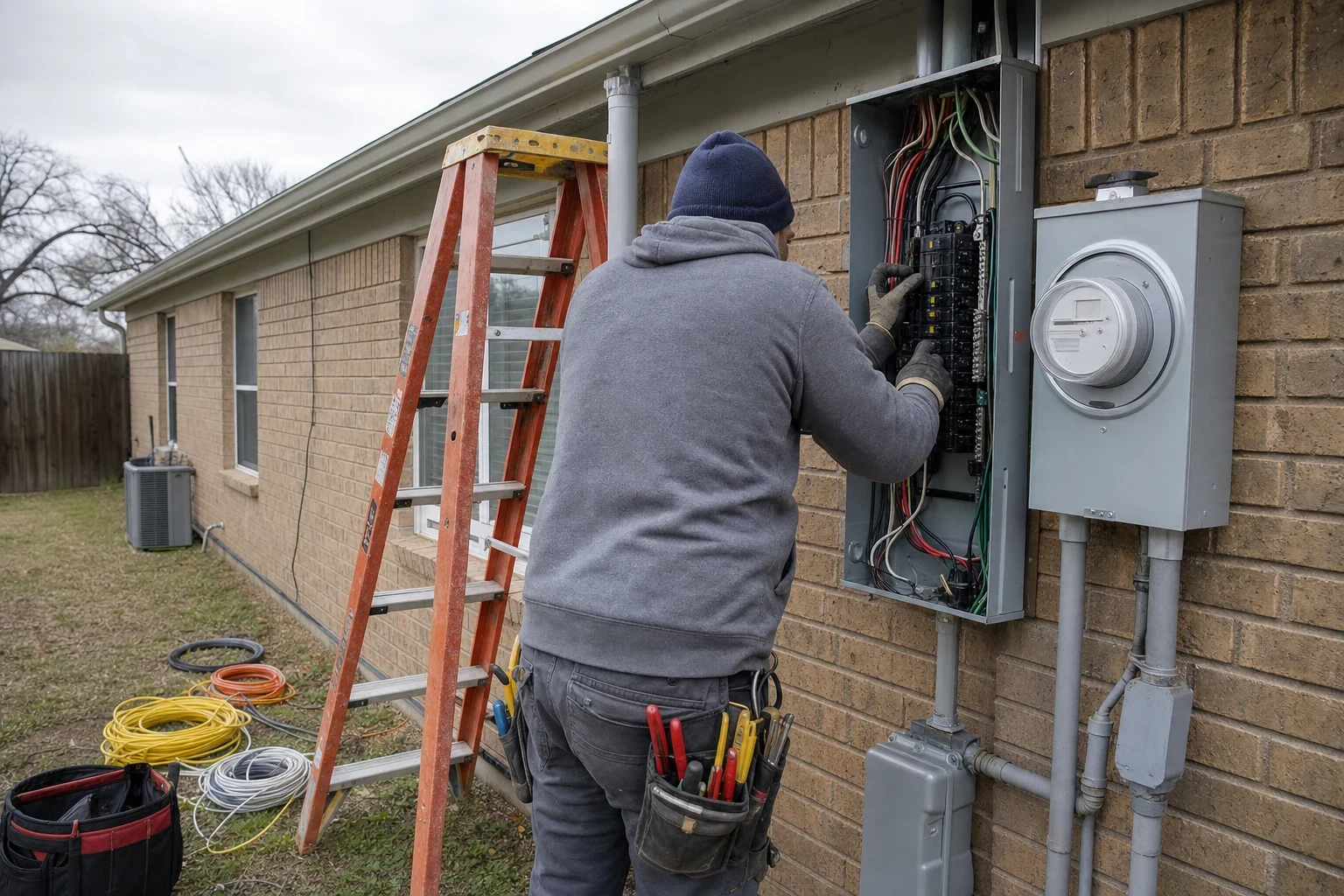
Battery jobs vary more than most electrical work because the equipment and the wiring both scale with what you want covered. We price it after the service visit, line by line, so you can see where the money goes. Here is what pushes the number up or down.
- How much storage you want
- One battery for essentials costs far less than stacked units meant to carry most of your home for a day or more.
- Backup loads panel or whole-home
- Moving select circuits to a separate panel takes labor. Backing up the whole home takes heavier switching gear instead.
- Panel condition
- An old or full panel may need replacing first. That is often the biggest swing in price.
- Distance and mounting
- A long run from the panel to the battery, or an outdoor pad instead of a garage wall, adds material and time.
- Local fees and paperwork
- Fees, drawings and inspection steps differ by jurisdiction, and we list them in the written scope.
Home Battery Backup Questions
Something not covered here? (682) 327-0639
How long will a battery run my home?
It depends on what is turned on. Essentials like a fridge, lights, internet and a few outlets can last many hours on a single battery. Add central AC or an electric dryer and that time drops fast. We give you a realistic estimate based on your actual circuits.
Do I need a permit for a home battery?
Yes, in nearly every case. A battery ties into your home's wiring and changes how power flows during an outage, so the local jurisdiction wants to review it and send an inspector. We file the paperwork and meet the inspector on site.
Can it go in my garage?
Often, yes. Code sets clearances and may require protection from cars bumping it. Garages in a Texas summer get hot, so we check the maker's temperature limits before we settle on a spot.
Will my panel need to be upgraded?
Sometimes. If your panel is full, undersized or showing wear, adding a battery to it is not a good idea. We tell you during the visit and explain the panel upgrade so you can decide.
Is a battery or a generator better?
A battery is quiet, needs no fuel and switches over faster. A standby generator runs longer and handles bigger loads like central AC more easily. We lay out both honestly based on how you use power.
Ready to Plan Your Backup Power
We start with a service visit to look at your panel, pick the circuits and find the right spot for the battery. You get a written scope, with the paperwork and inspection included, before any work begins.