ServicesPanel Upgrades
Panel Upgrades in Westworth Village
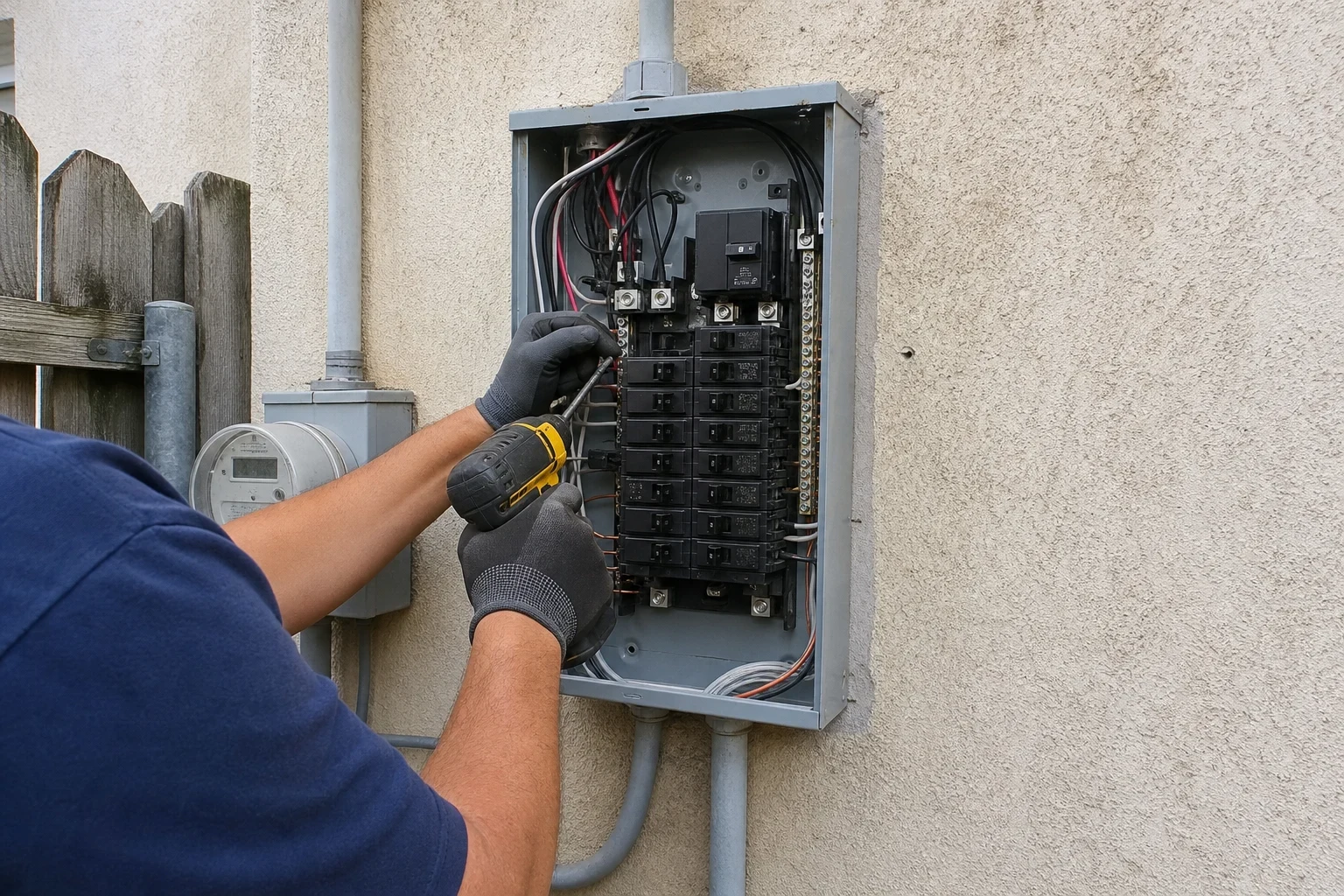
If your panel is full, old, or tripping under load, we swap it for one sized to how you use power today. We pull the permit, coordinate the power shutoff, and walk you through what the inspector checks before the job is closed out.
When Replacing Your Panel Makes Sense
Every circuit in your home begins at the panel. Once it's out of space, worn out, or never built to handle an air conditioner, an EV and a modern kitchen all at once, you start seeing tripped breakers, warm covers and additions that can't be wired safely.
Plenty of panels don't need to be replaced. Often the actual problem is a loose connection or a single failed breaker, which our electrical repair visit takes care of. We tell you which situation you're in before we price any work.
When a new panel is the right answer, we install it to the letter of the code and the way the inspector wants to see it. Every panel change gets inspected, and the job should close with a passed inspection, not just a handshake.
What a Panel Upgrade Includes
Load calculation
We add up what your home actually draws, including AC, range, dryer, water heater and any planned EV charger. That number decides the panel size, not a guess.
Paperwork and inspection
We file what your local jurisdiction requires and schedule the inspection. You do not have to call the city or wait on hold.
Utility coordination
Larger service upgrades mean the power company has to disconnect and reconnect your service. We set that up and plan the day around it.
New panel, breakers and labeling
Every circuit is moved to the new panel, tightened to spec, and labeled so you can find the right breaker in the dark. Breakers that the code now calls for, such as AFCI or GFCI protection on certain circuits, are added where required.
Grounding and bonding check
We check the ground rods, the bond to your water and gas piping, and the main grounding conductor. Older installs often fall short here, and inspectors look closely at it.
Cleanup
Old panel, scrap wire and packaging leave with us. Any wall opening around the panel is left neat and ready for paint.
Signs Your Panel Needs Attention
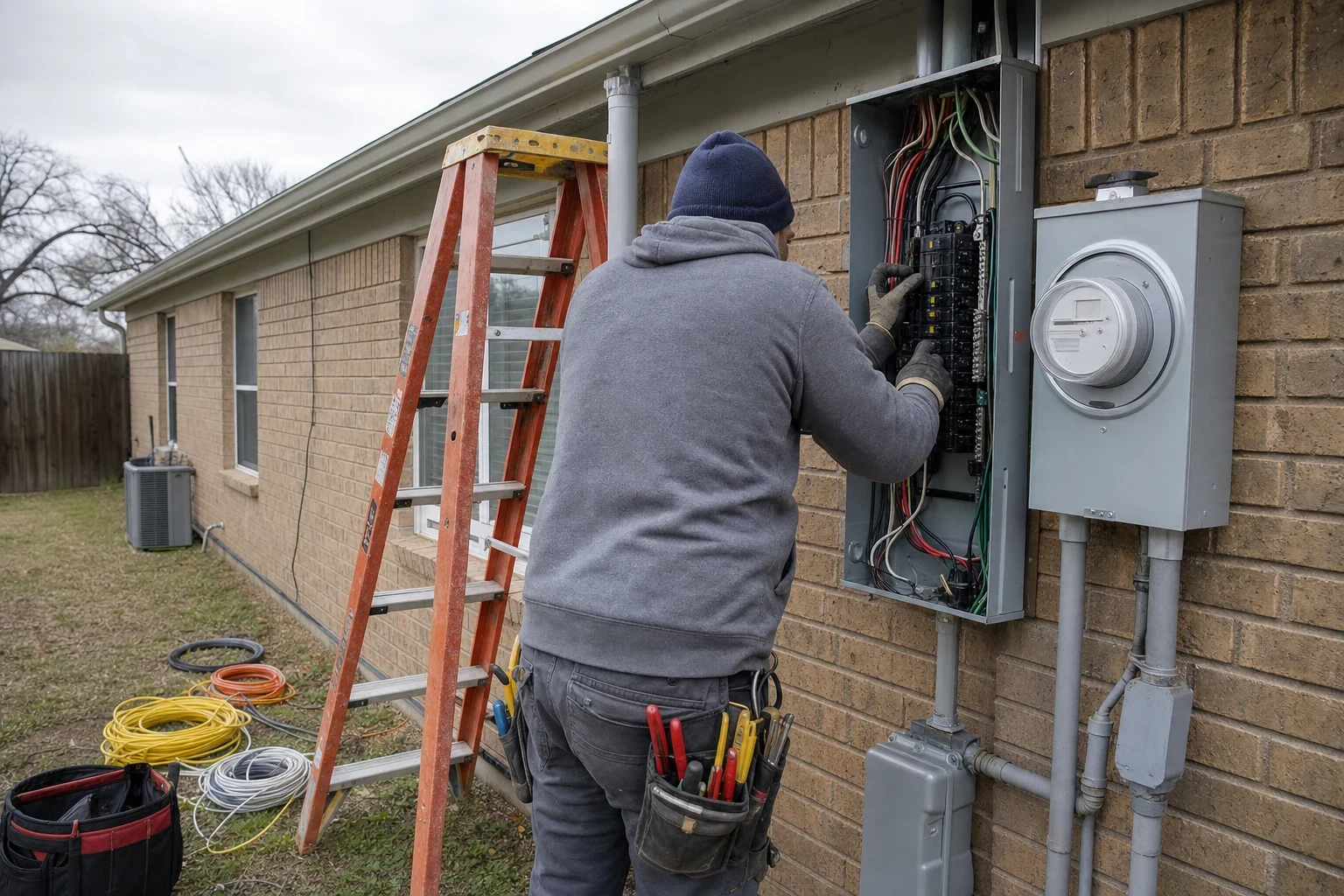
- Breakers trip under normal use
- If the AC kicking on or the microwave running knocks out a circuit, the panel or the circuit may be overloaded. In Texas summer heat, that strain runs for months at a time.
- No room for new circuits
- Every slot is full, or someone added tandem breakers to squeeze in more. That usually means the next project, like a charger or a remodel, needs a bigger panel first.
- Heat, buzzing or scorch marks
- A warm cover, a hum, or brown marks around a breaker point to a bad connection. Turn off that circuit if you can and get it looked at soon.
- An older panel brand or fuse box
- Some older panel brands have a poor track record, and fuse boxes were sized for far less load. Insurers and home buyers' inspectors often flag both.
- Flickering lights across the house
- Lights that dim in several rooms when a big appliance starts can mean a loose main connection or undersized service.
How a Panel Upgrade Day Runs
- 1
Service visit and load check
We look at your current panel, service wires, meter base and grounding. We run the load numbers and explain plainly whether you need a new panel, a bigger service, or just a repair.
- 2
Written scope and paperwork
You get a written, line-item scope before anything starts. Once you approve it, we file with the local jurisdiction and book the utility disconnect if one is needed.
- 3
The swap
On work day the power is off for most of the day. We mount the new panel, move and label each circuit, add required protection, and correct grounding. Plan for a day without power, and keep the fridge closed.
- 4
Power back and testing
After reconnection we test every circuit and check voltage at the panel. We show you the new layout and which breaker does what.
- 5
Inspection
The inspector reviews the work against code. If anything tied to our work is noted, we correct it and get it rechecked, and the job is closed out on record.
What Moves the Price of a Panel Upgrade
Panel upgrades vary more than most people expect. Two homes with the same size panel can need very different work behind it. We price after we have seen your setup, and the written scope shows each part of the job.
- Panel size and service upgrade
- Staying at the same amperage costs less than moving up. A larger service may also need a new meter base and heavier service wire.
- Panel location
- An outside panel with clear access goes faster. A panel buried in a finished wall, closet or tight garage corner takes more labor.
- Grounding and old wiring
- Missing ground rods, a weak bond, or brittle wiring at the panel all have to be brought up to code before the inspector signs off.
- Breakers required by code
- Current code calls for AFCI and GFCI protection on many circuits. Those breakers cost more than standard ones, and the count depends on your home.
- Jurisdiction and utility fees
- These fees are set by the local jurisdiction and the utility, not by us. We list them on the scope so nothing shows up later.
Questions About Panel Upgrades
- Is the permit for a new panel handled by you?
- Yes. Every panel change needs one, and we file it with your local jurisdiction before work begins. We book the inspection too and meet the inspector when needed. The job isn't finished until a passed inspection is on record.
- How long will I be without power?
- For most panel swaps, plan on most of one day with the power off. When the utility needs to disconnect and reconnect your service, their timing can stretch that. We go over the plan with you the day before so you can get ready.
- Can I add an EV charger once the new panel is in?
- In many cases, yes. The load calculation shows whether your service can run a charger on top of your AC and appliances. Let us know early if one is in your plans so we size the panel for it, and we can do the EV charger installation separately or on the same day.
- Does constant breaker tripping mean I need a new panel?
- Not necessarily. An overloaded circuit, a worn breaker or a wiring fault can all cause tripping. We test before anything else and suggest a panel upgrade only if the panel is the actual cause.
- Will a new panel guard against power surges?
- Not on its own. A whole-home surge protector mounts at the panel or right beside it, so plenty of homeowners add surge protection during the upgrade while the power is off anyway.
Ready to Look at Your Panel
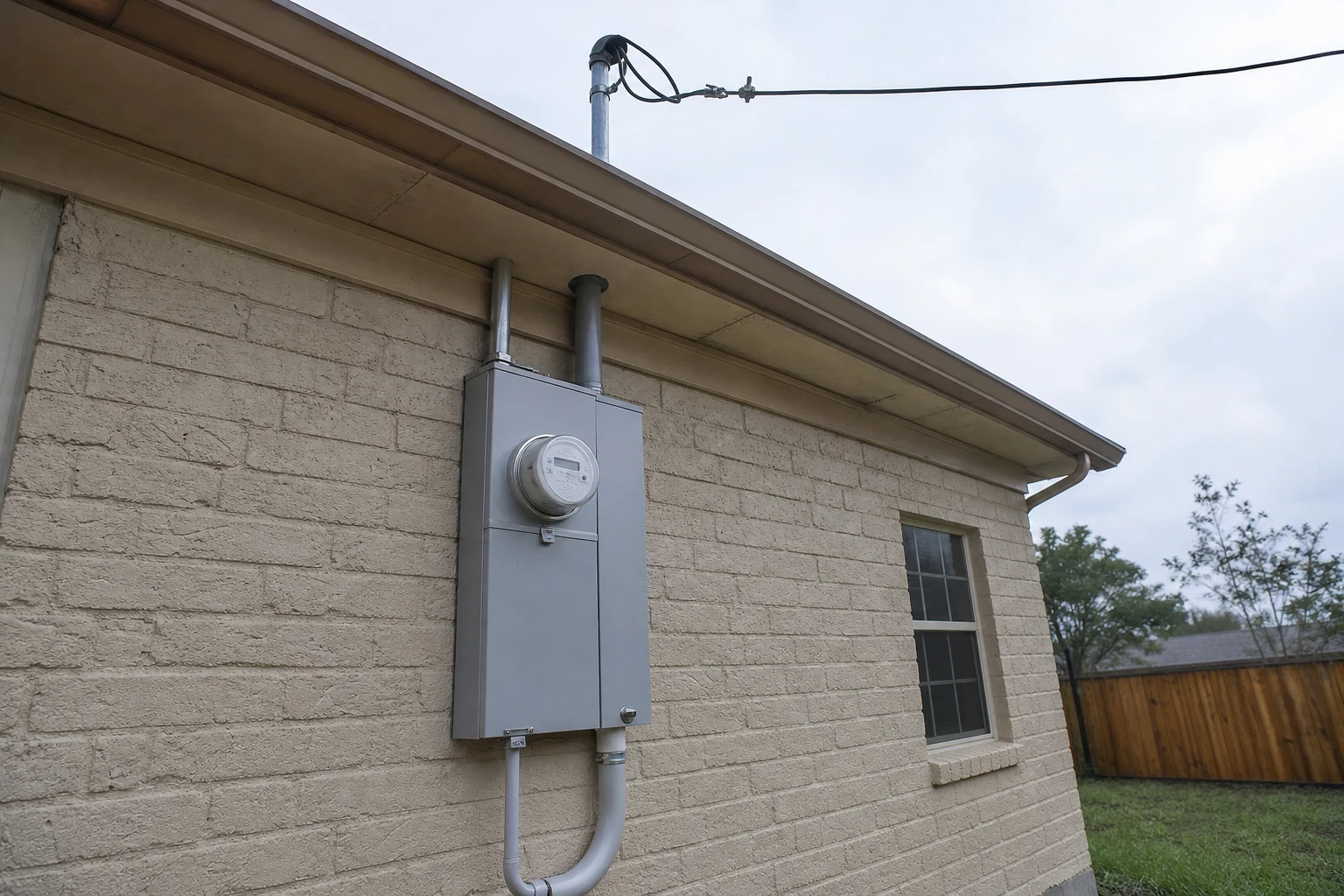
We will check your panel, run the numbers and tell you plainly what it needs. If it is an upgrade, the permit and inspection are part of the job from day one.